

Seeing is Believing
Aliens, Basketball, and Kalshi, oh my! Plus: new reviews, interviews, essays, and a sneak peek at upcoming Substack-exclusives.


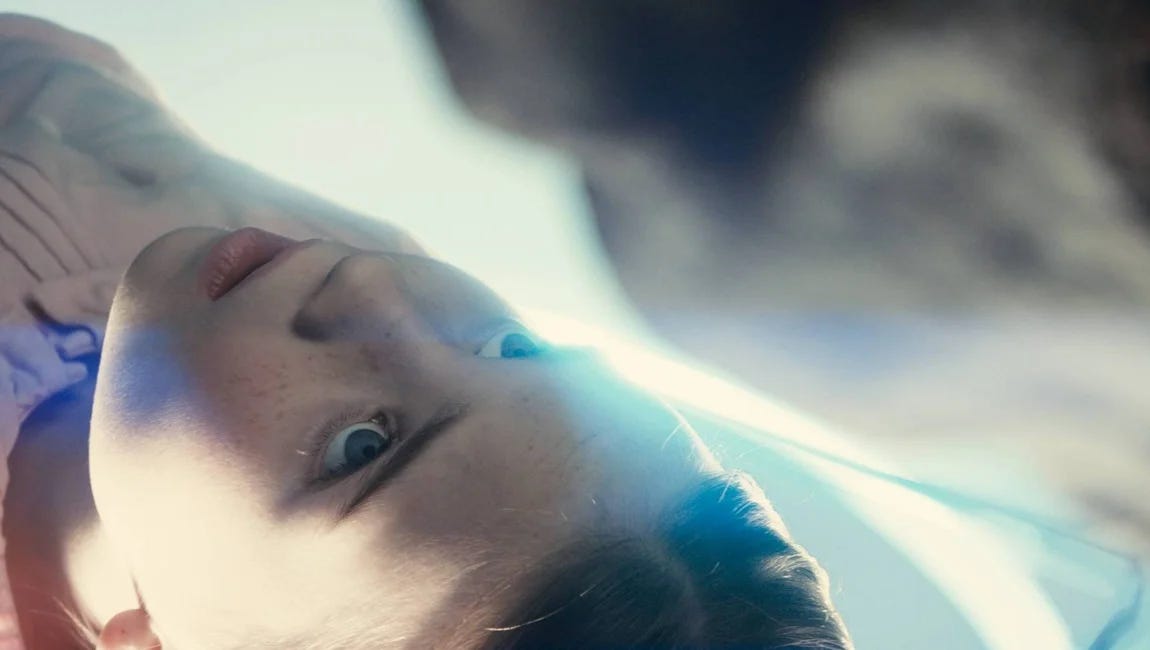
Part of Steven Spielberg’s signature is to convey the overwhelming power of awe. That mark is ubiquitous in his latest, Disclosure Day. Emily Blunt’s Margaret Fairchild is a meteorologist for the Kansas City NBC affiliate who, one day, unexpectedly taps into otherworldly powers that had been long-dormant until that morning. She’s late for work and rushing through breakfast when, suddenly, a Cardinal flies through her apartment window and makes eye contact with her. She shakes off this occurrence as best she can, but something about her has changed. She’s able to get out of a speeding ticket on the way to work by reading the police officer’s mind, and later does the same to a struggling coworker, in each instance telling them truths about their lives that they likely already knew but were afraid to say themselves. These small interactions take on a quasi-religious quality and leave Margaret’s counterparts — be they friendly or antagonistic — flummoxed, mouths agape but speechless. But the kicker comes a few minutes later when, during her live forecast, Margaret’s poise under pressure collapses and she begins speaking in unintelligible clicks and gasps. Now, the befuddled and appreciative stares curdle into confusion and terror.
The rest of the film is a plot-heavy, conspiratorial affair. A second storyline centers Daniel Kellner (Josh O’Connor), a whistleblower and former employee of mega-corporation Wardex, who is trying to disclose the truth about alien life on earth, which Wardex itself has protected and exploited for nearly 80 years. It turns out Margaret and Daniel are two sides to the same alien-encounter coin; Margaret was blessed, or cursed, with the power of total empathy after an alien visitation during her childhood; and Daniel with the power to translate mathematics into English — perhaps the ultimate knowledge — when he was a struggling college student. Together, along with a group of other Wardex defectors led by Hugo Wakefield (Colman Domingo), Margaret and Daniel’s power to reveal the full truth of the universe to humankind carries a messianic inevitability. The question is, should they? Spielberg’s belief in the power of truth and humanity’s inherent willingness to believe when faced with it, drives the alien optimists and pessimists (led by Wardex boss Noah Scanlon, played by Colin Firth) to converge on the Kansas City studio to broadcast it to the world.
In the film, the question of seeing and its subsequent believing has nothing to do with the existence of aliens — that’s a given. The impact of the digital globe-trotting climax, a complex choreography of language and sentiment facilitated by satellite links and people trying their damndest to do a good job to deliver the news, ultimately hinges on this tenuous exchange between a different kind of seeing and believing altogether. Whether or not Disclosure Day works for you largely depends on the degree to which you agree with Spielberg’s belief in truth’s rationalizing power, particularly when it’s bestowed by images. As someone who has seen the most unimaginable images, indeed proof, of genocide in Gaza, and Lebanon, and Iran, and Sudan over the past three years, with not so much as a finger lifted by those in power to stop it, I’m one of those who struggle to sympathize with Spielberg’s optimism. What good has unequivocal, visual proof of an earth-shattering truth done for us the last few years? Then again, I also believe in what Wakefield, the film’s ultimate optimist, screams to former friend Scanlon via telepathic communication: “This 79-year terror campaign of lies, obfuscation, and cover-up has to end!” It’s hard to ignore the coincidence of Spielberg’s birth, the founding of Israel, and the birth of modern UFO mythology occurring within a few months of each other, around 79 years ago, as not having some part to play in his ideas at the center of the film. Perhaps even those seemingly least likely to do so can find a way to step into the light of truth.
In the last week I’ve seen, even in my relatively small, admittedly insular world, similar occasions of collective awe and action inspired by another frustratingly out-of-reach but nevertheless inevitable event akin to Disclosure Day. The New York Knicks’ final triumph in Game five of the NBA Finals was the happiest I’ve seen the city since Zohran Mamdani won the mayoral election last November — and even then, that victory didn’t exactly cross political divides. The Knicks are, unquestionably, a unifying force in the City, and the scenes on the streets after their victory proved it.
Like aliens, some things about this championship run needed to be seen to be believed. More than one win was snatched from the claws of defeat in the most spectacular fashion, including a buzzer-beater for the ages. But even one of the most public Knicks fans couldn’t fend off their most sinister and cynical impulses just as a whiff of championship victory wafted past them. Timothee Chalamet inexplicably followed Game Four’s euphoric victory by launching a partnership with betting company Kalshi — one of the most ugly celebrity cash-grabs I’ve seen in quite some time. Unlike his famous ballet and opera faux pas last Ffall, there’s no room for misinterpretation here. The promise of the 53-year prophecy being fulfilled was, as with Wardex and the aliens, the ultimate opportunity to make a quick buck.
But there was also hugging and screaming, crying and dancing; Spike Lee’s fashionably bespectacled head poking out a car’s sunroof, like a King paraded before his adoring subjects; lovers, or perhaps just friends overwhelmed by the occasion, climbed a street lamp and kissed passionately in front of a throng of shrieking, jubilant onlookers; and two guys helped the morning garbage men take away the detritus of the previous night’s celebrations, Frank Sinatra’s “New York, New York” accompanying them in a TikTok — irrefutable video proof of their good deed. One of the city’s largest ever parades happened just yesterday, at the end of which Mamdani gave a speech invoking many of the signatures we can identify in Spielberg’s cinema when something monumental and awe-inspiring happens to the world:
“For 53 long years we have watched and we have waited.
wWe have watched from nosebleeds and through gritted teeth, on televisions in the windows of electronic stores, and from projectors balanced on fire escapes. We have watched alone in our apartments with our heads in our hands, shoulder to shoulder at bars where the signal flickers, alongside friends and family who we wish more than anything could be here today, sharing this moment…We waited without ever knowing if this day would come, and we waited because we knew deep down in our deep-suffering hearts that it would.”
For New Yorkers, seeing was believing. Perhaps I need to get my heart out of my ass and start, too.
There’s lots of great stuff awaiting you in the rest of this week’s newsletter. To make up for the heterosexual vibes of my note, given it’s Pride Month, my selections of new release reviews, interviews, features, our very limited coverage of the Tribeca (Film) Festival, and sneak peeks at upcoming Substack-exclusive essays, will be as queer as possible. Cishets: proceed with caution.
I wish you happy reading and happy watching.
— Chris Cassingham
Newsletter Editor
On The Big Screen
Cinematic highlights, from the multiplex to the arthouse


A breakout at this year’s Sundance Film Festival, Adrian Chiarella’s Leviticus puts an intelligent, religious, queer spin on a number of horror and coming-of-age tropes. While some reviews have compared it to It Follows, Leviticus stands on its own. In his review Chris Cassingham notes the balance between sensitivity over subjects like religious fundamentalism and conversion therapy, and an embrace of sexual provocation: “The unstoppable urge to do what one knows one shouldn’t finds every imaginable outlet in Leviticus.” Out June 19th via NEON.
Comedian John early makes his directorial debut with Maddie’s Secret. As Christian Craig suggests in his review, “With the DNA of a comedy sketch, Maddie’s Secret is a drag performance, an ’80s after-school special, a Sirkian melodrama, a cutting satire of millennial America… all centered around a woman with an eating disorder.” Playing the titular Maddie in drag, Early deftly balances satire and sincerity. The jokes are a mile-a-minute thanks to supporting turns by frequent collaborators Kate Berlant, Conner O’Malley, Eric Rahill, and Vanessa Bayer, but the film’s genuine heart is the star. Out June 19th via Magnolia Pictures.
Musician Hayley Kiyoko makes her directorial debut with Girls Like Girls, an adaptation of a novel of the same name, which was based on her song of the same name. Layers of reflexivity aside, Tyler Thier argues in his review of this queer coming-of-age drama that its “greatest strength is found in these lyrical, golden-hour-bathed images of the two girls simply wasting away the daylight hours together.” Out June 19th via Focus Features.
Other reviews worth noting: Mark Jenkin’s Rose of Nevada, Julian Chou’s Blind Love, Karla Murthy’s The Gas Station Attendant, Steven Spielberg’s Disclosure Day, Erige Sehiri’s Promised Sky, Michael Sarnoski’s The Death of Robin Hood, and Haifaa Al-Mansour’s Unidentified.
Conversation Pieces
Straight from the source


Brandon Streussnig spoke with the directors of two recently restored queer cult classics. The first, Silas Howard and Harry Dodge’s By Hook or By Crook, a pioneering trans crime drama; and the second, Mary Harron’s I Shot Andy Warhol, the filmmaker’s follow-up to American Psycho that, through rights complications and the transition to digital filmmaking, was almost lost.
We have more filmmaker interviews, including Mark Jenkin with Chris Cassingham, who spoke on the occasion of the release of his third feature, Rose of Nevada; while Kenji Tanigaki and Lilian T. Mehrel, each spoke with Brandon Streussnig about their films The Furious, and Honeyjoon, respectively.
A Feature, Not a Bug
Features, Essays, and other in-depth curios
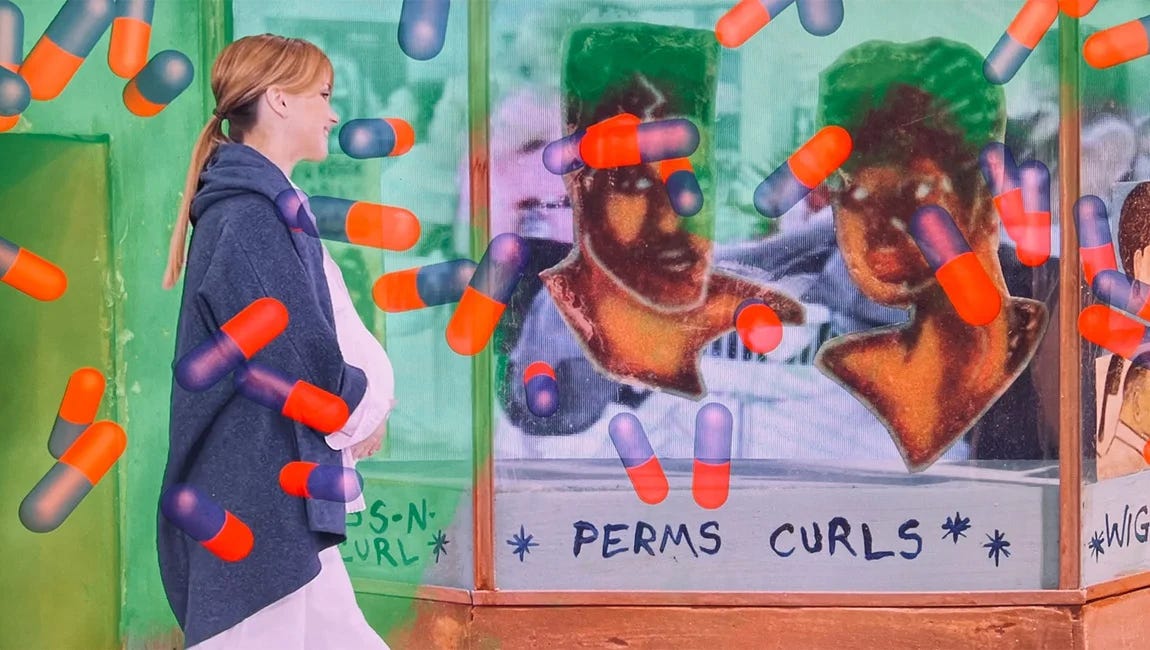
Connor Arakaki offers a reflection on the latest film from underground filmmaker Jon Moritsugu, Numbskull Revolution. Starring Amy Davis and James Duval (of early Gregg Araki fame) as competing contemporary artists, it adds a proudly DIY, fuck-it-all dimension to a recent trend of art world satires (including one from Araki himself).
“Maintaining his classic DIY streak of post-ironic irreverence, Moritsugu transforms institutional critique into a deranged feedback loop, one where every artistic attempt at sincerity is immediately commodified, aestheticized, and sold back as spectacle. Self-declared as ‘a punk rock Blade Runner for artists,’ anthe film emerges as a satire of the art world, and an erratic portrait of today’s culture that is unable to distinguish artistic transcendence from self-parody, intoxicated by its own collapse.”
Tribeca Was Also There
A roundup from a festival of increasing disrepute
Perhaps that’s harsh to the film festival that doesn’t technically call itself a film festival as it celebrates its 25th year with the World Premiere of an entirely AI-genterated “documentary” about the recent Iranian political uprisings, and offers a soft, vague condemnation of the language of two Israeli filmmakers who decided to run their mouths on the red carpet.
There were many worthwhile films in the lineup, though In Review Online decided to narrow its attention on a few. Lauren Wissot reviewed two documentaries, The Haunting of Pennhurst, about the infamous Pennhurst State School and Hospital; and Kids Like Me, the heartwarming story of Oliver Odwazny-Beebe, a 12—year old aspiring filmmaker with a rare genetic condition who will stop at nothing to make his first film.
Morris Yang, Daniel Gorman, and Michael Sicinski reviewed three narrative features, respectively: Ponderosa, Act One, and Mother Future Self, while Brandon Streussnig interview the directors of the first two, Rob Rice and Sophia Takal, which are available only to our Substack subscribers.
In the Re(ar)view
Timely selections from the InRO archive


Chantal Akerman was born 76 years ago on June 6th, 1950. A giant of international cinema, though a reluctant and occasionally antagonistic representative of queer and feminist cinema, her films nevertheless contain both and many more of those dimensions. To mark the occasion of her birth, look back on three essays by our writers on some of her most famous and not so famous films, inlucing Lydia de Matos on News From Home, Dhruv Goyal on Le Captive, and Zachary Goldkind on Night and Day.
Coming Soon…only to Substack
A look at some of the exclusive features, essays, and other pieces of critical writing we have in store, exclusively for Substack subscribers.
We published a raft of fantastic Substack-exclusive essays and features since our last newsletter, including a dispatch from the Nitrate Picture Show and review of Bill Morrison’s latest feature, darker, both by Robert Stinner; a reflection by Chris Cassingham on the films of Mexican experimental filmmaker, Teo Hernández; an essay by Milo Garner on two of Marlene Dietrich and Josef von Sternberg’s famous collaborations from the 1930s: Dishonored and The Scarlet Empress; and finally, an essay by Sarah Fensom on the short films of Canadian filmmaker Kalil Haddad.
On Monday, we’re publishing an expansive interview with Louise Weard about her monumental Castration Movie, whose third part will begin a theatrical tour this summer. We also have our eyes set on the Museum of Modern Art’s upcoming Immigrant Nation series, a summer long program of immigration-themed cinema from around the world. Finally, be on the lookout for an essay on a trend of violent face-smashing in recent horror films (inspired by mega-hit Obsession); and, in early July, two reports from Il Cinema Ritrovato, the largest festival of new film restorations in Bologna, Italy, on their Barbara Stanwyck retrospective and the new director’s cut of Ken Russell’s The Devils.
 | A guest post by
|